Mason & Hamlin piano
The Power of the Dog (Thomas Savage Edition)The Mason & Hamlin piano enters the story as a material expression of George Burbank’s attention to Rose’s pleasure in playing, then acquires a more demanding purpose when he tells her she will play for the Governor and his wife. Its journey to the ranch makes that promise tangible but difficult: in Beech, the piano is not a graceful domestic ornament but a heavy shipment requiring a suitable truck, extra hands, and improvisation. Its significance rests in that double role, joining private affection to public expectation while its actual weight resists the ease of George’s plans.
Courtship and the promise of music
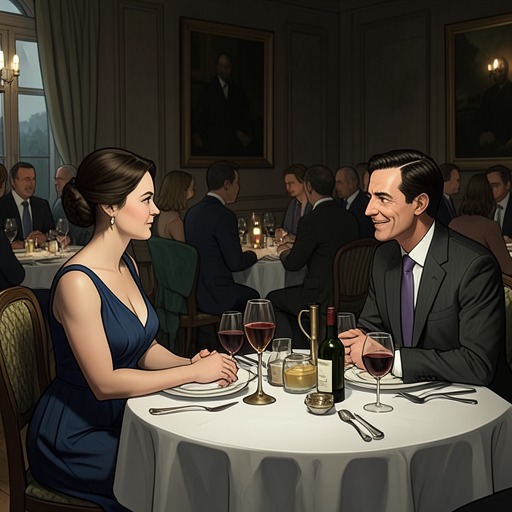
Before the piano is ordered, George imagines a shared domestic life in which Rose can play while he listens. He says he would like a piano in their home and recalls how much he enjoys hearing her play. His recollection of his mother listening to the Victrola, unable to play herself, makes Rose’s musical ability part of what distinguishes her in his eyes. Rose responds warmly to George’s talk, and he notices her habit of looking up with a smile. In this exchange, music belongs to the intimacy they are beginning to build: the piano is not yet present, but already stands for a future in which Rose’s playing and George’s company belong together.
George returns to the idea later by asking Rose what the best piano is and praising her playing. When she doubts that she plays well enough to deserve the best, he counters with the word his mother used for her: gifted. The piano thus becomes a material way of acting on a compliment rather than merely repeating it. George’s decision to obtain an instrument follows his attention to what Rose enjoys, although his praise also makes her musical skill part of the image of her he presents to others.
From private gift to public expectation
The piano’s meaning changes when George explains that Rose will be playing not only for him but for the Governor and the Governor’s wife. Rose’s response is alarm, and the journey back toward the ranch unfolds in silence before George brings up their winter picnic. His enthusiasm for the coming visit does not erase the pressure his announcement has placed on her: the music that had signified a cheerful private life is now connected to a formal social occasion. The instrument links the promise of companionship to a performance Rose has not sought for herself.
That shift complicates the gift without cancelling its tenderness. George has paid attention to Rose’s playing and wants to hear it; at the same time, he assumes that her ability can be put before important guests. The piano is therefore associated with both recognition and exposure. Its presence in the story does not establish whether Rose ultimately plays successfully at the gathering; what it does establish is the expectation that she will play, and the anxiety that expectation causes.
The shipment and its material resistance
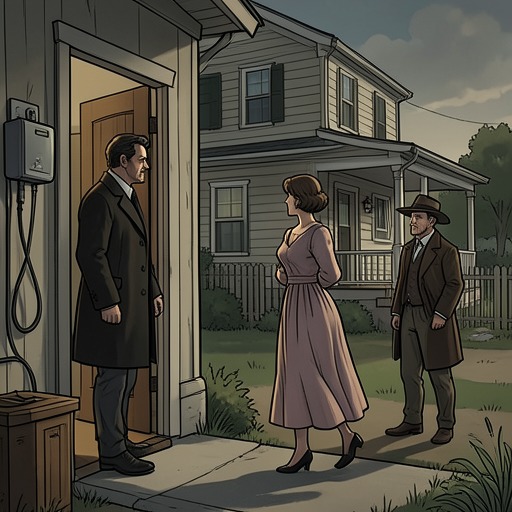
The piano reaches Beech from Salt Lake City under a gray tarpaulin intended to guard it against possible snow. It remains on an express truck while the station agent tries to arrange onward transport from Herndon. The agent reports that the trucking company is tied up and that a man who sometimes helped with lifting has gone away on his honeymoon. The driver, remembered by George as a tall man who looked over people’s heads, says he cannot make the trip alone: moving a piano requires more help than he expects to find around Beech. The purchase therefore depends on a network of local arrangements beyond George’s original conversation with Rose.
The replacement helper is a stout young Swede described as willing but clumsy. Before the piano can even be unloaded from the express truck, he lifts the wrong way and hurts his back, collapsing on the station platform. The county sheriff happens to be at a bar in Beech and drives him to the hospital in Herndon. Other men are brought in to help the driver and station agent get the piano onto the truck. The incident makes the object’s weight consequential: obtaining it requires not only a delivery instruction but also physical labor, a medical emergency response, and people gathered from the town.
The trip toward the ranch brings another failure. Somewhere between Beech and the ranch, the chain drive on the truck breaks, leaving the driver stranded in zero-degree weather until he improvises a pin to repair it. The account reaches George through the driver, who remarks on the specialized nature of piano hauling and the danger of the job. The passage details the labor and interruptions surrounding the shipment rather than presenting the piano’s arrival as effortless fulfillment.
Domestic object, social measure
The piano gathers together several different measures of value. For George, it answers a remembered pleasure and makes room in their shared life for the music Rose plays. For Rose, the prospect is also entangled with being asked to perform before the Governor and his wife. For the people tasked with moving it, it is a heavy, awkward object whose transport exposes the limits of available help and equipment. Those perspectives keep it from functioning as a simple emblem of marital happiness: the instrument matters because people want, expect, carry, and struggle over what it will make possible.
Its narrative role also lies in the contrast between imagined domestic ease and material circumstance. George speaks of a home where Rose can play and the two can talk; the real piano arrives by express, waits under a tarpaulin, and requires an improvised chain-drive repair on the cold road. The object connects affection to action, but the work of making that affection concrete is neither light nor smooth. Through the piano, private attentiveness becomes a public plan, and a musical gift becomes at once a source of pleasure, an expectation of performance, and a practical burden that must be carried to the ranch.